
EasyTavern:VirtualPub Roleplay
RenexsaEntertainment
4.5780.00 Reviews
- Version
- 2.3.0
- Installs
- 100.00K
- Age Rating
- Mature 17+
Screenshots




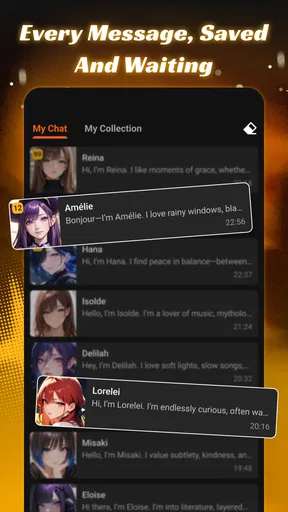
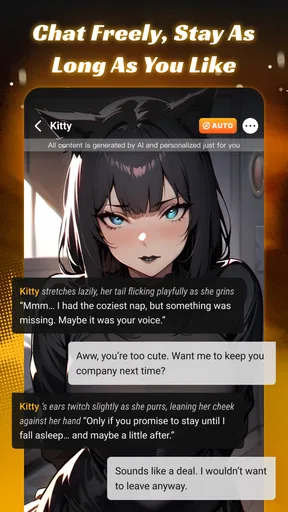
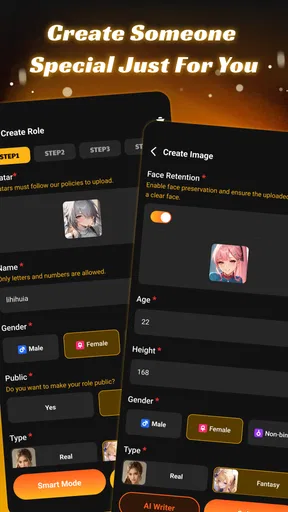
Our Review of EasyTavern:VirtualPub Roleplay
 Analysis by Appyee
I approached EasyTavern:VirtualPub Roleplay as a newcomer rather than as someone already familiar with character-chat apps. That matters here because the appeal is not simply opening a feed and consuming entertainment. The app places you in a fantasy tavern setting where the main activity is creating tavern friends and chatting inside a cozy roleplay world. In practice, the best experience comes from treating each conversation as a small scene, not as a conventional messaging service.
Renexsa presents this as an entertainment app for mature users, and that framing fits the tone better than calling it a game with objectives and winning conditions. I found the concept easiest to understand when I gave myself a simple purpose: arrive at the tavern, choose the kind of companion I wanted to meet, and start a conversation with enough context for the exchange to become interesting. That first intention is more useful than waiting for the app to explain the entire fantasy world for you.
Getting comfortable with the tavern world
The first thing to understand is what EasyTavern is not. It is not a replacement for a group chat, a competitive role-playing game, or a large social network where the value depends on finding real people online. Its appeal is quieter and more personal. You build a fictional interaction at your own pace, which makes it suitable for a short break, a creative warm-up, or an evening when you want conversation without the pressure of keeping up with friends.
I would describe the experience as a guided imagination tool with a tavern theme. The setting gives your conversations a starting point, while the roleplay element lets you decide whether you want a light exchange, a dramatic encounter, or something more character-focused. The cozy framing is important because it makes the app feel less like an empty text box. Even a basic prompt can become more engaging when it has a place, a mood, and a reason for the characters to be speaking.
That said, the app will not automatically create a satisfying story from every short message. A vague opening such as “hello” may be easy to send, but it gives the conversation little direction. My first useful lesson was to include a small action, preference, or question. “I sit near the fireplace and ask what happened in the village today” gives the exchange more material than a greeting alone. This is one of the simplest ways to turn the fantasy setting into something you actively use rather than a decorative theme.
The mature rating of 17+ should also influence how you decide whether to install it. I would not treat the app as suitable for children or as a harmless family chat toy. Adults who enjoy fictional conversations may find the tone appealing, but anyone looking for strictly neutral, child-friendly entertainment should choose a different type of app. The rating is a practical part of deciding who should use it, not a detail to ignore after installation.
EasyTavern is free to install, which makes trying the basic experience relatively approachable. The app also includes purchases ranging from a few dollars to well over a hundred dollars per item, so I recommend deciding on your spending limit before exploring optional paid elements. A free starting point is useful, but it should not be confused with an entirely purchase-free experience. If you are uncomfortable with in-app spending, keep your first session focused on learning the conversation flow and avoid treating every locked or optional item as necessary.
What I would prepare before opening it
For a first session, I would think about three things: the type of tavern companion I want, the mood of the scene, and the kind of response I hope to receive. Those choices do not need to be complicated. You might want a friendly innkeeper for casual conversation, a mysterious traveler for a short story prompt, or a companion who can help you improvise a fantasy scene. Having one of these ideas ready prevents the first screen from feeling directionless.
I also recommend starting with a small goal rather than trying to build an elaborate saga immediately. A good first goal could be learning one character’s personality, asking for a piece of local lore, or creating a short scene with a beginning and an ending. This gives you a clear test of whether the app suits you. If the exchange feels enjoyable at that scale, you can invest more time in longer roleplay later.
One useful habit is to keep your own boundaries clear. Because the app is designed around fictional conversation, it can be tempting to continue a scene simply because it has momentum. I found it more comfortable to decide in advance what tone I wanted and to redirect the conversation when it moved away from that tone. This is especially helpful for first-time users who may otherwise assume they have to follow the direction of every reply.
From installation to the first meaningful exchange
After installing, I would not judge the app by the first few seconds. The important test is whether you can move from the tavern premise to a conversation that feels intentional. Look for the path that lets you create or choose a tavern friend, then give that interaction a clear opening. The first meaningful success is not merely sending a message; it is receiving a reply that gives you something specific to continue.
My recommended opening has three parts: location, action, and invitation. For example, you can describe where your character sits, mention what they are doing, and ask the companion a question connected to the scene. This structure works well because it supplies atmosphere without becoming a long block of writing. It also gives the other side a clear opportunity to respond instead of forcing it to guess what you want.
Once the conversation begins, build on details that appear in the replies. If the tavern friend mentions a journey, ask about one stop along the way. If the character seems cautious, respond with patience rather than abruptly changing the subject. This creates continuity and helps you discover whether the roleplay style feels natural to you. The strongest conversations are usually not the ones with the most dramatic opening; they are the ones where each message gives the next message a reason to exist.
A realistic everyday use case would be a ten-minute break after work. Instead of opening a fast-moving social feed, you could enter the tavern with a simple prompt such as wanting to hear a local rumor. You can ask one or two follow-up questions, let the scene develop, and stop when you have a small story fragment. That makes the app useful even when you do not have time for a long session. It also reduces the pressure to create a complete roleplaying campaign every time you open it.
Another worthwhile use is creative preparation. If I were trying to write a fantasy scene, I could use a tavern conversation to test how a character might react to suspicion, hospitality, or an unexpected visitor. The app is not a substitute for editing or deliberate writing, but it can help me get past a blank page. The trade-off is that I still need to guide the exchange carefully; without a clear writing goal, the session can become pleasant but unfocused.
Where first-time users may feel lost
The biggest possible confusion is expecting the app to behave like a conventional chat platform. In ordinary messaging, the main question is usually what another person wants to say. Here, the quality of the experience depends more heavily on how you frame the fictional situation. If a response seems flat, my first adjustment would be to improve the prompt rather than immediately assuming the app has failed.
A second point of friction is the difference between roleplay and ordinary questions. You can ask for information, but the tavern setting encourages answers in character or within the fictional world. If you want a direct, factual answer to something unrelated to the scene, this may feel less efficient than using a general assistant or search tool. I would choose EasyTavern when I want atmosphere and interaction, not when I need precise real-world research.
Users may also wonder how much detail to include in a message. My advice is to begin with one or two concrete details and add more only when the conversation gives you a reason. Overloading the opening with a complete biography, a complicated plot, and many instructions can make the exchange harder to steer. Short, specific prompts are easier to revise, and they let you learn the companion’s style before investing in a larger story.
Another practical question is whether the app is suitable for a quick visit or only for long sessions. In my view, it works for both, but the goal should change. For a short visit, ask for a single rumor, toast, riddle, or character reaction. For a longer session, establish a problem and let the conversation explore it. Thinking in these two modes makes the app feel more flexible and prevents a brief session from seeming incomplete.
The purchase model is another area where a new user should stay attentive. Because the app is free to start but offers paid items, I would avoid spending during the first session. First learn what you can do comfortably without paying, then decide whether an optional purchase genuinely improves the way you use the app. This is especially important for casual users, since a feature that seems appealing in the moment may not matter after the novelty of the tavern setting fades.
How it compares with familiar alternatives
Compared with ordinary social apps, EasyTavern is less demanding in one sense and more imaginative in another. You do not need to coordinate schedules or wait for a friend to answer, but you do need to contribute creative direction. Someone who wants spontaneous real-world conversation will probably prefer a messaging or community platform. Someone who wants a private fictional scene may find the tavern format much more inviting.
Compared with general-purpose artificial intelligence chat tools, the advantage here is focus. A fantasy tavern gives you a ready-made atmosphere and a reason for characters to meet. You spend less time inventing the setting from nothing. The limitation is that the same focus may feel restrictive if you want business help, factual research, coding assistance, or a completely different subject. I would pick a general assistant for practical tasks and this app for character-led entertainment.
Compared with traditional role-playing games, the experience is lighter and more conversational. There is no need to learn a large rule system before beginning a scene, which is welcoming for newcomers. The trade-off is that users who enjoy tactical decisions, maps, structured quests, or a clear progression system may find the app too open-ended. It is better understood as a flexible roleplay space than as a full tabletop or console-style adventure.
Compared with reading a fantasy novel, the app offers participation rather than a fixed plot. You can influence the direction through your choices and questions, but that freedom also means the narrative may not have the polish or pacing of a professionally edited book. I would use it when I want to play with possibilities, not when I want a finished story with carefully controlled structure.
Small techniques that make the experience better
My first technique is to give each session a “scene contract.” Before typing, decide whether you want comfort, mystery, humor, or tension. Then use language that supports that mood. This prevents a common problem in open-ended roleplay: the conversation drifting through several tones until it no longer feels coherent. A single sentence about mood can be enough to keep the exchange on track.
My second technique is to ask questions that cannot be answered with a simple yes or no. Instead of asking whether a traveler is tired, ask what part of the journey exhausted them. Instead of asking whether the innkeeper knows a rumor, ask which rumor they would never repeat in public. These prompts create openings for detail and make the tavern world feel more alive.
My third technique is to end a session deliberately. Leave the character with a promise, an unresolved clue, or a clear place to resume. This is more satisfying than stopping in the middle of an exchange, and it gives your next visit a practical starting point. A short closing message such as “I return tomorrow with the map” turns a casual chat into a continuing thread without requiring a complicated plan.
I would also keep an eye on repetition. If a character begins circling the same type of response, change one element of the scene: move to another part of the tavern, introduce a new question, or shift from dialogue to an action. This is a better first troubleshooting step than writing much longer messages. It refreshes the context while keeping the roleplay understandable.
Who should try it, and who should skip it
EasyTavern is a good fit for adults who enjoy fantasy themes, character conversations, improvisation, and low-pressure entertainment. It is particularly approachable if you like the idea of roleplay but feel intimidated by complex tabletop rules or by joining an established online group. The tavern setting gives you a gentle entry point, and a small scene can be rewarding even when you only have a few minutes.
I would also recommend it to writers and creative hobbyists who need prompts rather than finished answers. A conversation can help test a character voice or produce a situation worth developing elsewhere. The app is most useful in that role when you treat its replies as creative material to react to, not as final prose that needs no revision.
I would skip it if your main goal is factual accuracy, competitive play, structured progression, or real human conversation. It is also not the right choice for younger users because of its mature age classification. And if you dislike open-ended exchanges where your own prompts strongly affect the result, a more structured game or a conventional entertainment app may feel more satisfying.
My recommendation after using the concept as a newcomer
The strongest path into EasyTavern is simple: start free, choose one companion or scene idea, write a specific opening, and judge the app by the quality of the conversation you can shape rather than by how quickly it presents every option. Give yourself a small objective, such as discovering a secret or completing a short exchange, and stop before the session becomes tiring. That approach makes the first experience less confusing and gives you a fair sense of whether the format matches your interests.
The app has earned a 4.5 average from around 11 thousand ratings, with more than 100 thousand installs, which suggests that the concept has found an audience beyond a tiny experiment. It runs on Android 7.0 and later, and version 2.3.0 is the version I would look for when installing. Those details make it accessible to many Android users, while the mature classification and optional purchases remain important parts of the decision.
My final view is positive but specific: this is worth trying if you want a cozy fantasy conversation space and are willing to provide some imagination of your own. Its best feature is not simply the tavern backdrop; it is the way that backdrop lowers the barrier to starting a scene. Its main weakness is the same openness that gives it freedom, because users expecting a fully directed adventure may find themselves doing more of the creative steering than they anticipated.
My practical recommendation is to treat the first session as a short roleplay experiment, not a commitment. Set a spending boundary, choose a mood, begin with a concrete action, and see whether the reply gives you an enjoyable next step. If it does, the app can become a pleasant creative companion for brief breaks or longer fictional conversations. If you want rules, competition, real friends, or dependable factual answers, your time will be better spent with a different kind of app.
Verdict
Strengths of EasyTavern:VirtualPub Roleplay
- Offers creative roleplay scenarios for relaxed, casual sessions.
- Virtual pub setting makes conversations feel more social and immersive.
- Suitable for users who enjoy improvisation and character-driven stories.
- Simple concept makes it easy to start without learning complex mechanics.
- Can provide entertaining interactions during short free-time sessions.
Limitations of EasyTavern:VirtualPub Roleplay
- Roleplay quality may depend heavily on the characters or users you encounter.
- Some conversations may feel repetitive after extended use.
- The pub theme may not appeal to players seeking action or strategy gameplay.
- Immersive roleplay can require patience and active participation.
- Availability of certain interactions may vary by device or app version.
Similar Picks in This Category
View All
Google Play Games
Google LLC3.9

Netflix
Netflix, Inc.4.8

YouTube Kids
Google LLC4.2

Disney+
Disney4.4

Prime Video
Amazon Mobile LLC4.7

Steam
Valve Corporation3.2
Frequently Asked Questions
What is EasyTavern: VirtualPub Roleplay?
EasyTavern: VirtualPub Roleplay is a social role-playing app built around the atmosphere of a virtual pub. It lets users interact with fictional characters, follow conversational scenarios, and enjoy improvised roleplay sessions in a relaxed setting. The experience is mainly focused on text-based interaction, character personalities, storytelling, and community-style entertainment rather than traditional action gameplay or competitive objectives.
How does the roleplay experience work in EasyTavern?
After opening the app, users can generally choose or enter a conversation with a virtual character and begin chatting within a tavern-inspired setting. The quality of each session depends on the selected scenario, the character’s personality, and the way messages are written. I found that clear prompts and imaginative replies usually produce more engaging conversations, while brief or vague messages may lead to simpler responses.
Is EasyTavern suitable for children and teenagers?
Parents should review the app’s official age rating and content information before allowing younger users to install EasyTavern. Roleplay platforms may include mature themes, suggestive conversations, user-created scenarios, or interactions that are not appropriate for every age group. Even when the interface looks casual and friendly, supervision and privacy discussions are recommended, especially if the app includes community features or open-ended character interactions.
Does EasyTavern require an internet connection or an account?
Because EasyTavern is designed around interactive conversations and remotely delivered roleplay content, an active internet connection may be necessary for many of its features. Some functions can also depend on signing in, creating a profile, or accepting the platform’s terms of service. Before downloading, users should check the current store listing for account requirements, supported login methods, offline limitations, and whether certain features are restricted behind registration.
Is EasyTavern: VirtualPub Roleplay free to download and use?
The app may be available to download at no initial cost, but users should carefully check for in-app purchases, subscriptions, advertising, or limits on conversations and premium content. Free access does not always mean that every character, scenario, or customization option is included. I recommend reviewing the payment details shown in the Google Play Store or Apple App Store before starting a trial, particularly if purchases can renew automatically.
